
Yes, you can organize your search prompts with tags: simple, reusable labels that let you group, filter, and manage prompts without creating separate reports or workspaces. Think of them as flexible folders that a prompt can belong to several of at once.
What you can use tags for
- Projects or campaigns — "SEO", "Q1 Launch", "Brand Monitoring"
- Products or product lines — "Product A", "Product B"
- Intent — "Visibility Check", "Competitive Analysis"
- Clients or brands — "Client X", "Client Y" (essential for agencies)
You can add as many tags as you like to each prompt, and reuse any tag across prompts.
How to add a tag
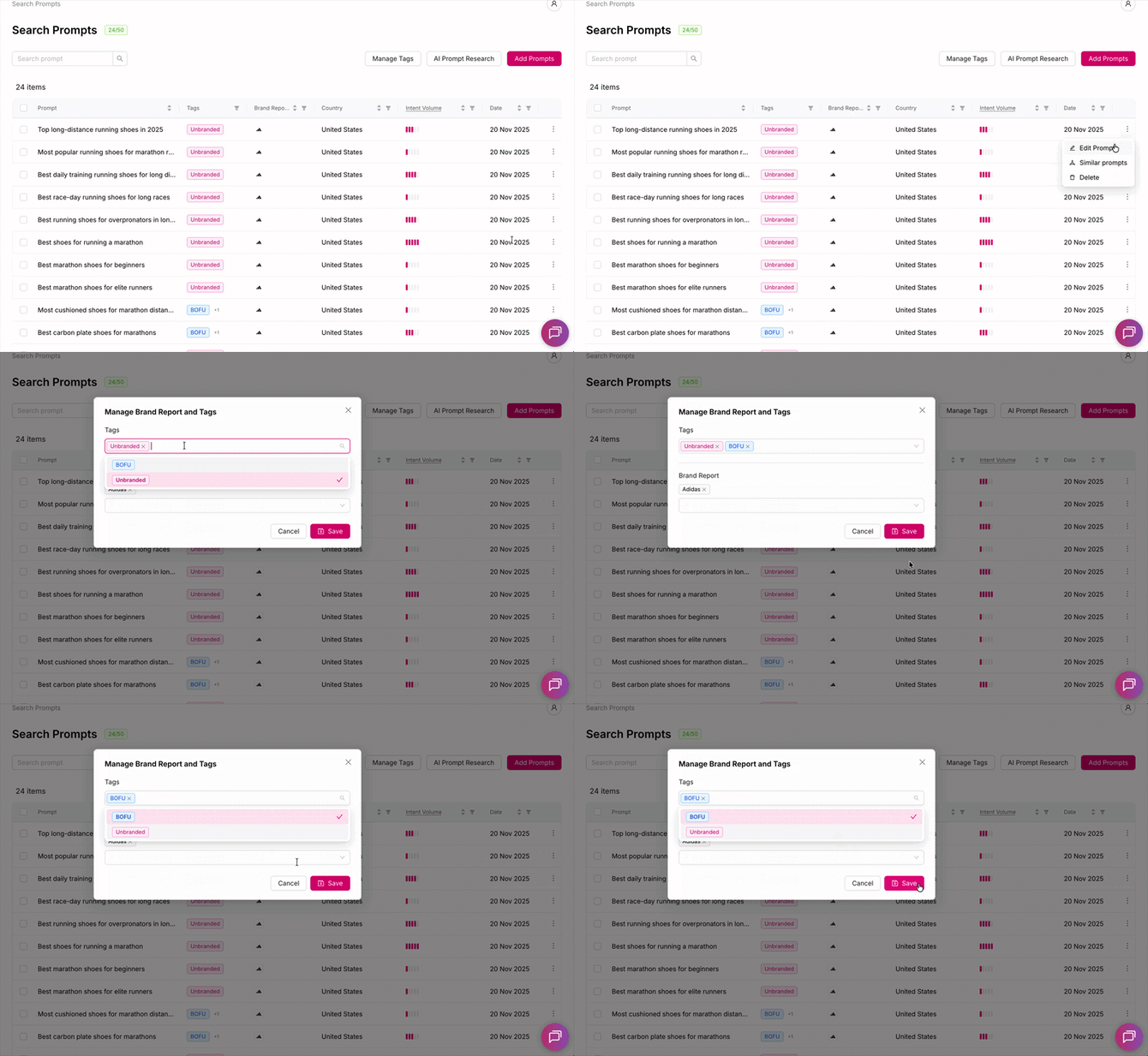
- Create or edit a search prompt.
- In the Tags field, start typing a tag name.
- Select an existing tag, or create a new one on the spot.
- Save the prompt.
To create a tag, go to Search Prompts › Tags › Create Tag.
✅ Tags are reusable. Once created, a tag can be applied to any prompt instantly — you don't recreate it each time.
How to filter prompts by tag
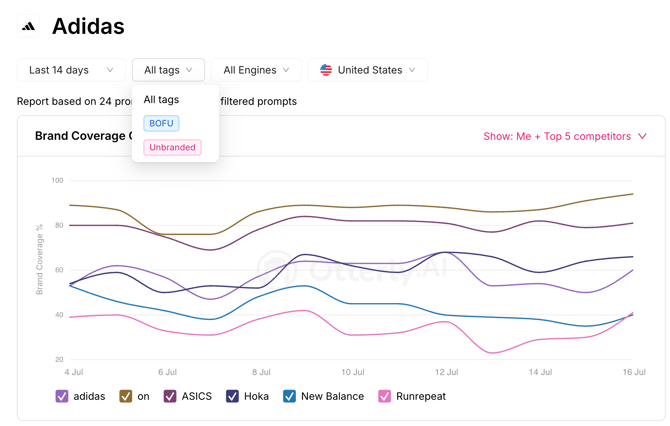
Go to your Brand Report.
- Use the Tag Filter at the top to select a tag.
- The view instantly narrows to just the prompts with that tag.
How to remove a tag from a prompt
- Open the Search Prompts section in the left sidebar.
- Find the prompt, click the three-dots menu, and choose Edit prompt.
- In the Tags field, remove the tag and save.
Good to know (current limitations)
We're actively improving tags. A few things to be aware:
- Filtering by tag in the report Overview is one tag at a time — multi-tag selection in the Overview isn't available yet.
- Tags are removed one at a time — no bulk tag removal yet.
- CSV prompt imports don't carry tags — you'll add tags after importing.
💡 These are on our radar — follow the Changelog for updates, or suggest an improvement.
Best practices
- Keep tag names short and descriptive ("SEO", "Brand Visibility").
- Use consistent naming — decide singular vs. plural up front ("Competitor" vs. "Competitors") so your tags don't fragment.
- Agree on a tag convention across your team before you scale, so everyone tags the same way.
Related articles