
The Citations report in your OtterlyAI Brand Report is one of the most actionable insights you can use to understand how AI perceives your brand across the web. Think of it as a full content gap analysis showing you exactly where your brand appears, where your competitors are mentioned, and where you may be missing visibility in sources that ChatGPT, Perplexity and other AI engines rely on.
OtterlyAI analyzed 1,400,000 citation links in September 2025 and found that the most frequently cited sources were brand websites, news and media outlets, and Reddit.-Jul-17-2026-11-37-23-6796-AM.png?width=670&height=371&name=Screenshot%20(4)-Jul-17-2026-11-37-23-6796-AM.png)
That's why it's important to dig into these categories and identify missing mentions, so you can spot opportunities to appear in the sources AI relies on most — ultimately improving your discoverability.
What's in the Citations report?
At the top of the report you'll find filters for date range, tags, engine, and country, so you can focus on exactly the slice of data you care about. Below that, the report is built around a few key areas:-Jul-22-2026-11-52-07-1522-AM.png?width=670&height=321&name=Screenshot%20(1)-Jul-22-2026-11-52-07-1522-AM.png)
Top Winners & Top Losers
These two panels show which cited URLs changed the most compared to the previous period (it's an equal-length window immediately preceding your selected date range), the three biggest gainers and the three biggest decliners by percentage change in citations.
- Top Winners highlights pages that are being cited far more than before — useful for spotting content (yours or a competitor's) that AI has started to favor.
- Top Losers highlights pages losing citations — an early warning if your own content is slipping, or a sign a competitor is losing ground.
💡 A URL climbing in Top Winners is a strong signal of what AI currently rewards. If it's a competitor's page, it's a template for the content you should create; if it's yours, it's working, do more of it.
💡 Analyze before you act. Both panels rank by percentage change, so a page starting from a very low base can show a striking jump on only a handful of new citations. Open the citation, check its actual count and trend, analyze and compare.
The calculation formula is: ((current − previous) / previous) × 100
Open any citation for full details
Click any citation, whether it's in Top Winners, Top Losers, or the All cited URLs table to open its Citation Details. This panel shows everything about that cited page in one place: its citation metrics, whether your brand is mentioned, the competitors referenced on it, and the prompts it was cited in. It's your starting point for deciding what to do about a specific URL.
Citations Over Time
A trend chart showing how the citations develop across the selected period, so you can see the direction of travel rather than just a single day's snapshot. Watch it after publishing or optimizing content to confirm your efforts are moving the needle.
Cited in prompts
Within a citation's details, the Cited in prompts view shows which prompts that URL was cited in, now including a Brand Coverage column so you can tell, at a glance, how often your brand appears for those prompts. Clicking a prompt opens the Prompt Details view directly on top of the citation you're viewing, so you can drill from "this URL is cited" all the way down to "here's the exact AI answer it was cited in" without losing your place.
All cited URLs
The full, searchable table of every cited URL, with columns for citations count, brand mention (Yes/No), domain, domain category, and competitors referenced on that page. Use the search box to jump to a specific domain or URL, and the column filters and sorting to focus your analysis.
⭐ Star the citations that matter
You can star any citation to build your own shortlist of the pages worth acting on — click the star icon on a row in the All cited URLs table, or on any entry in Top Winners or Top Losers.
- Stars are synced everywhere: star a URL in Top Winners and it's starred in the main table too, and vice versa.
- Stars are personal to you — the citations you star are visible only to you, so your shortlist stays your own.
Starring is a fast way to flag high-priority PR targets or content opportunities as you spot them, then come back to your starred list later.
📺 Prefer to watch? Take a look at the walkthrough video.
Break the report down by team
You can focus the report section by section, giving each team a clear, data-backed action plan.
Brand category
Your content team might spend their time in the Brand domain category. This portion of the report shows which pieces of branded content AI is already using to answer queries related to your prompts.
By analyzing these links, you can guide your editorial strategy: update outdated content, create stronger versions of competitor pages, and expand into new topics that AI is already pulling from but where your brand isn't yet represented.
Blogs and News/Media
This section helps your PR and communications teams understand where your brand is (or isn't) being mentioned across authoritative news and media sources — the places AI heavily trusts.
Using the domain category filter, select News/Media and/or Blogs, then apply the Not Mentioned filter. This instantly highlights articles, editorials, or posts where your competitors are mentioned but your brand isn't, signaling a clear PR outreach opportunity.
You can export these URLs to build targeted pitches, understand which journalists or publications to engage, and track which sources may have a strong influence on how AI forms brand responses. Because Citations update daily, you can monitor how coverage changes and how your PR efforts impact AI visibility over time.
💡 Star the strongest opportunities as you find them, so your outreach shortlist is ready when you switch to pitching.
Community/Forum and Social media
For social and community teams, the report helps surface conversations happening beyond traditional media.
Using the domain category filter, select Community/Forum or Social media to reveal threads, discussions, and posts where your competitors may be referenced more often than your brand. This is especially useful for platforms like Reddit.
A brief visualization demonstrating the filter-selection process: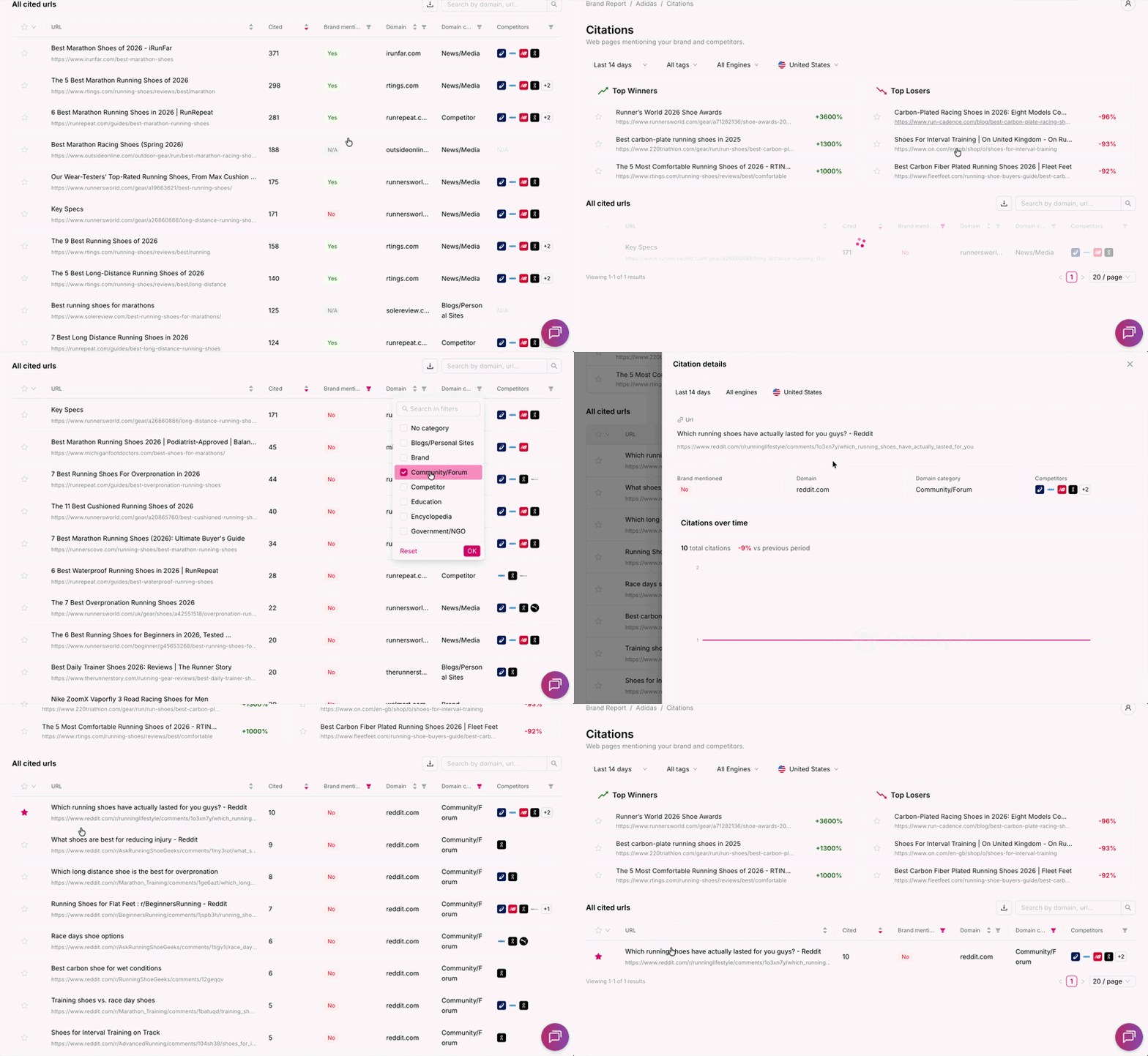
The Citations report gives every team — PR, Content, and Social — a data-backed action plan. By identifying where you're absent but competitors are present, tracking what's gaining and losing citations over time, and starring your highest-impact opportunities, you can prioritize the right work and make sure AI consistently recognizes your brand.
Related articles